
Many young children feel a natural curiosity when it comes to playing with a ball. Whether it is rolling it back and forth with someone or chasing it round their garden, children really enjoy playing with balls. Pre-school football builds on this and using games and play-style training, it can help them to develop their movement, cognitive skills and build their confidence.
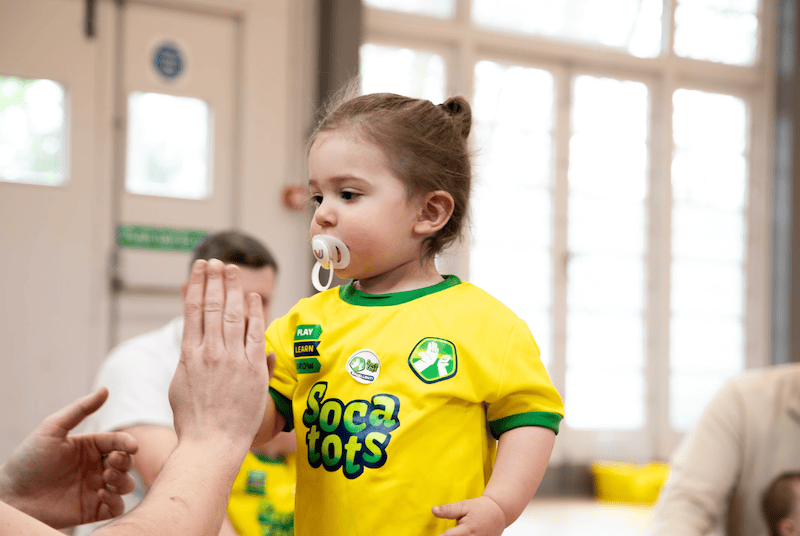
In this guide, we will look in detail at pre-school football, what it has on offer and how it will help your child.
What is pre-school football?
Pre-school football is a play-based introduction to football, aimed at children who have not yet started school. At Socatots, children can attend our classes from as young as 6 months up until they are 5 years old.
Rather than focusing on matches or winning, sessions use games, songs and simple ball activities to build the physical and social foundations a child needs before they ever play a competitive game. The emphasis is on fun and a good session looks less like football training and more like an active playgroup with a ball at the centre of every activity.
Many programmes, including Socatots, are designed so that parents or carers join in with the youngest age groups. This shared participation helps children feel secure in a new environment and helps to strengthen the bond between parent and child.
What age can children start pre-school football?
At Socatots, children can start pre-school football from as young as 6 months. This is fairly unique to Socatos with most other kids football training facilities starting at 18 months.
In truth, there is no singular “correct” age for your child to start as all children develop at different rates. What is really important is, that no matter their age, you find a class that is matched to your child’s development and where they will be treated as an individual, given support when they need it and celebrated when they do well or keep going.
What are the benefits of pre-school football?
There are many benefits to pre-school football that go beyond football itself. In the table below, we will look at the different type of benefits that football will offer your child:
| Area of Development: | How football helps: | What you might notice at home: |
| Physical | Builds gross motor skills, balance, agility and coordination | More confident running, climbing, jumping etc. |
| Cognitive | Teaches colours, numbers, shapes and how to follow instructions | Better listening skills and able to follow directions better |
| Social | Encourage sharing, taking turns and builds friendships and empathy | Easier interactions with other children. Easier transition when they start nursery and school |
| Emotional | Builds confidence through small wins and teaches children how to deal with failure | More willing to try new things and are not affected as much by setbacks |
| Lifestyle | Helps build positive relationship with physical activity | Asking to play outside, kick a ball around and wanting to be more active in general |
The NHS recommends that a child of pre-school age is active for at least 180 minutes (3 hours) each day. A weekly football session will offer a fun way to get some physical activity alongside offering all of the above benefits.
Is pre-school football right for every child?
Pre-school football can suit a variety of different children. Whether your child is energetic and extroverted or shy and more introverted, if they have an interest in football, they will likely have fun and benefit from attending classes.
It is completely natural (and okay) for a child to be nervous at their first session and not participate as much. Many children need time to warm up to a new environment, new adults and a group of unfamiliar faces. Patience does usually pay off though and most children join in fully within a few weeks.
If your child has any additional needs, speak to the coaches before booking or during your free taster session. Many coaches are happy to adapt activities and a short conversation beforehand helps them plan how best to include your child from the start.
How to Choose the Right Pre-School Football Class
There are many key factors that you should be on the lookout for when choosing a football class for your pre-schooler. They are:
- Qualified, DBS-checked coaches: This will mean that you know your child will be taken care of and learn whilst at class. It is also worth watching how coaches speak to the children. Be on the lookout for warmth, patience and plenty of praise for effort rather than outcome.
- Age-specific groups: Splitting classes into age groups means the class will work at the right pace and be doing the right activities for your child.
- Play-based curriculum: This keeps the sessions fun and appropriate for your young child.
- Suitable venue: Classes need to be held in a safe, clean space.
- Free taster sessions: These let you child try out the classes, making sure they are right for your child without it costing you a penny.
Book a free taster session at Socatots
How You Can Support Your Pre-Schooler’s Football Training at Home
The best way to suppress your child at home with their football training is to either keep doing some of the activities at home or to simply have a small football at home that you can play with them with. The most important thing is that you keep it fun and you offer them support and encouragement.
The Ultimate Guide To Pre-School Football
For most children, pre-school football is well worth trying. It offers a fun, structured way for young children to build balance, coordination and confidence while learning to listen, share and play as part of a group. Sessions are tailored to each stage of early development, need very little equipment and welcome children of every ability.
The key is choosing a class that has qualified coaches, age-appropriate groups and a play-based approach. With a little patience and plenty of encouragement, those first wobbly kicks can grow into a lasting love of being active.
At Socatots, our classes are broken up into age-groups and your child will be taught by qualified, DBS-checked coaches. All of our training contains games and music and your child will have a lot of fun.